

PALLETLESS LOADING
Sending loads on pallets to destinations where they are handballed out anyway has always been a costly exercise
Premier Pallet Inverters form a natural element in any pallet-less loading system.
Benefits include:
- Avoid manual stacking of goods
- Cuts the cost of lost pallets
- Combats the cost of using heat-treated pallets to meet ISPM 15 regulations
- Reduces weight and maximises cubage in the container
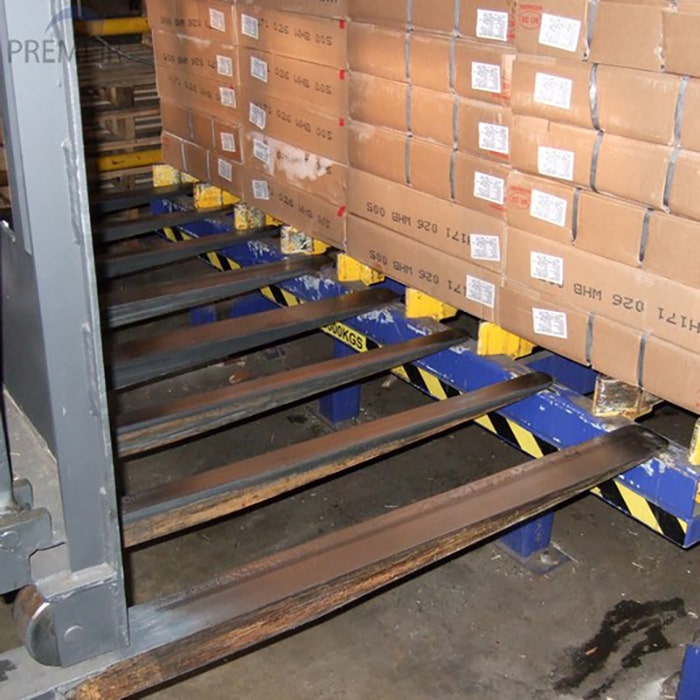
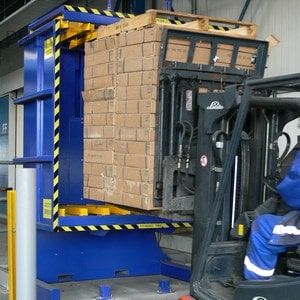
Loading products without pallets
Premier Pallet Inverters form a natural element in any pallet-less loading system. By inverting the product 180 degrees, you can retain your own pallets in-house and load containers in double-quick time. An ideal system for product which will be hand-balled out at its destination
Great for 'handballed' loads
Sending loads on pallets to destinations where they are handballed out anyway has always been a costly exercise, the only benefit being the initial convenience of loading. If the pallets now need to conform to ISPM15, the extra expense will justify a much closer look at alternatives. The increased cost of wood will only add to the argument.
Reduce cost of palletising
With the increased implementation of ISPM 15 regulations, Premier sees a much greater likelihood that exporters will want to avoid the cost of shipping even more expensive wooden pallets, and can now offer numerous methods of palletless loading of product into containers.
How palletless loading works
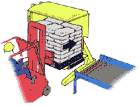 The inverter is loaded with the materials on the pallet you want to retain.
 At the push of a single button the pallet is gripped hydraulically, the load clamped and the inverter revolves through 180°.
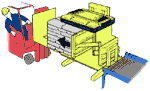 The clamping table rises and a second forktruck (fitted with plattens and a push-pull) approaches from the side. The driver powers a moving side wall on the inverter which pushes the load onto his plattens.
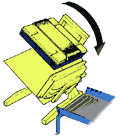 He drives away to discharge his load in the container after pushing a button to return the inverter to its starting position..
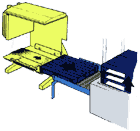 The pallet is released and is conveyed away to be stacked in a waiting accumulator.
Remote Operation
 Remote handset operation that can be used from within the forklift truck cab.
More about Palletless Loading
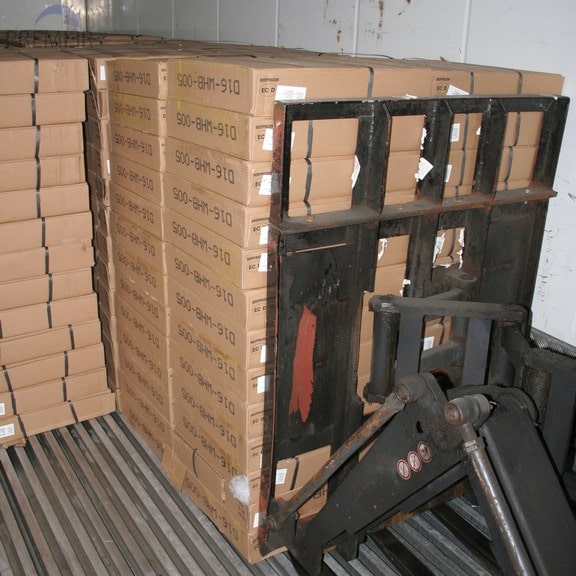
The original Palletless Loading System consists of a 180 degree inverter with a built-in pusher on the sidewall. The pallet is gripped and the load inverted. A forktruck equipped with a pusher attachment and broad platens receives the load from one side and drives into the container to discharge. Meanwhile, the system is reinverting the empty pallet dispatching it to the opposite side and stacking it up.
Allows access for multi-tyned trucks
A simpler alternative is to fit raised ribs to one table of the inverter allowing access by a multi-tyned truck again fitted with a scissor push to discharge the load.
Can be used where labour costs are outweighed by storage space
Most of the product handled in Premier's machines, be it milk powder in Ireland, sugar in the UK or boxed fish in Holland, is headed for third-world countries where handballing goods out of a container is commonplace. However, Premier have always been surprised how much travels this way to the United States and other more advanced markets. This indicates that the cost of labour at the destination is outweighed by the saving in space, pallets or other methods of manual loading at the point of origin.
Dutch-built roller fork system
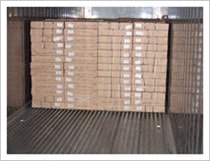
Another concept complimentary to Premier's inverter are the Dutch-built RollerForks. A conventional forklift truck is fitted with two, three or four of these specially designed tynes which are equipped with dual sets of tiny rollers. The load, minus the pallet, is picked off the ribbed table of the inverter and driven into a container. As the truck reverses, the rollers work in opposite directions, one set going backwards on the container floor, the other causing the product to roll off forwards into position.
Offers real flexibilty
With any of these systems, the producer has the benefit of the use of conventional pallets in-house and the option to decide at the last moment which product is to be exported and by what method. This flexibility is the key to cost savings and to giving the customer the load in the form they want it.
Palletless Rollerforks
Palletless Multiforks
Palletless Platten Push
Stock or Custom Made?
If our stock machines do not quite fit your requirements ask about our custom designed inverters to suit your needs
Built in the UK
All of our pallet inverters and changers are built at our site in the UK. We hold a stock of machines for quick delivery.